A diagnostic app can add information when considering a used car. It does not establish the vehicle’s complete condition or replace an independent inspection.
Advertisements

Compatible software and an adapter can make some electronic data accessible to an owner. Available systems vary by vehicle and equipment.
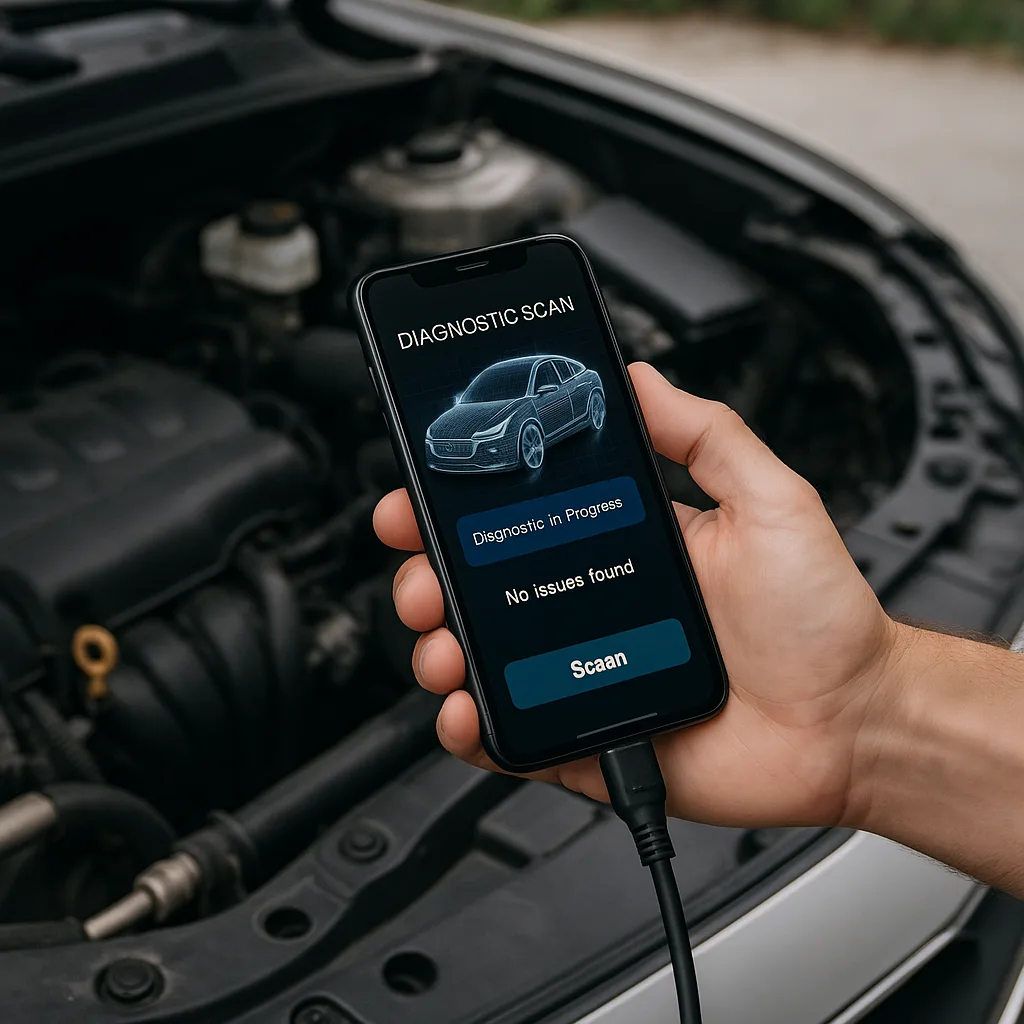
How a Car App Reads Diagnostic Data
A suitable adapter connects to the vehicle’s supported diagnostic connector and communicates with the phone. Confirm compatibility before purchasing or connecting it.
Supported readings may include engine or other electronic systems. Access to transmission, brakes, or every sensor is not universal.
A scan may show codes and available parameters. Its report is a starting point for interpretation, not a complete mechanical health certificate.
Situations Where a Scan Can Help
Before buying, a reading may reveal a recorded condition worth investigating. A clean result cannot prove that the seller’s vehicle has no faults.
When a warning appears, note the symptoms and code if safe to do so. Assess urgency through the vehicle’s guidance and appropriate professional advice.
A reseller can use consistent diagnostic checks as part of a wider inspection, rather than treating a quick scan as the purchase decision.
Functions to Compare
Basic code reading and live parameter displays are different capabilities. Check which functions the app supports on your vehicle.
Record faults before clearing codes and resolve the cause appropriately. Clearing a warning does not repair the car.
Understandable language, model information, and documentation can help interpretation. Confirm what is included before paying for additional features.
Convenience and Cost Compared With Workshop Diagnosis
An app and adapter may be useful for preliminary checks, but costs vary. Avoid comparing assumed prices with a professional diagnostic service.
Consider how the app handles vehicle data. Personal access offers convenience without guaranteeing local-only processing or eliminating the value of professional expertise.
A portable reader can help describe a problem while travelling. It cannot determine from every code whether driving should continue.
Limits of a Phone-Based Scan
Interpreting codes and finding the cause still require knowledge and appropriate testing. An experienced mechanic provides more than a code readout.
Leaks, wear, noises, and other mechanical problems may produce no readable code. Physical inspection remains essential.
Diagnostic access depends on the model, region, age, and system. A vehicle’s year alone does not guarantee complete support.
Examples for Fleets, Resellers, and Owners
A fleet manager can combine recorded faults with vehicle symptoms to prioritize further assessment. Not every warning can be resolved remotely.
A reseller can use scans to identify questions for a purchase inspection, without assuming every electronic or mechanical defect will be found.
A small workshop may use compatible software for supported tasks while retaining the equipment and expertise needed for more demanding diagnosis.
An owner can bring a warning code to a trusted mechanic and ask informed questions, rather than assuming either a cheap fix or a major failure.
Choose According to Your Experience and Vehicle
Start with the information you need and can interpret. More advanced controls are not necessarily useful for a casual owner.
Check model-specific support and varied reviews. A product working on one manufacturer’s vehicle does not establish equivalent support for another.
Find out what support is available and whether it covers your situation. Higher cost does not automatically include expert diagnosis.
A well-matched scanner can support informed maintenance decisions. Evaluate its actual limits rather than expecting guaranteed savings or complete independence from repairs.